 ultimate-guide
7 Benefits of High Security Deadbolts for Your Home
Quick Summary
High security deadbolts resist break-ins through three layers of protection: pin mechanisms that resist manipulation, hardened materials that slow drilling, and restricted keyways that limit who can copy a key. Standard locks offer far less resistance to deliberate attack. A strong lock also needs a reinforced frame and correct installation to perform as rated.
- Pin designs that bind unevenly make high security deadbolts harder to pick or bump.
- Hardened steel pins or plates inside the cylinder add time against drilling attacks.
- Restricted keyways limit who can legally cut a copy of your key.
- Check for a named standard, grade, and independent testing rather than marketing terms like pick-proof.
- A high-grade lock in a weak frame can still fail, so reinforce the strike plate with longer screws.
Table of Contents
- How High Security Deadbolts Protect Against Break-Ins
- Restricted Keyways and Controlled Key Duplication
- High Security Deadbolts Versus Standard Locks
- How to Evaluate Security Ratings and Certifications
- Why Door Frames and Installation Matter as Much as the Lock
- Trade-Offs, Costs and Choosing Between Mechanical and Electronic Models
- Getting Your Next Deadbolt Installed or Rekeyed
- Frequently Asked Questions
How High Security Deadbolts Protect Against Break-Ins
Last Updated: November 2, 2026
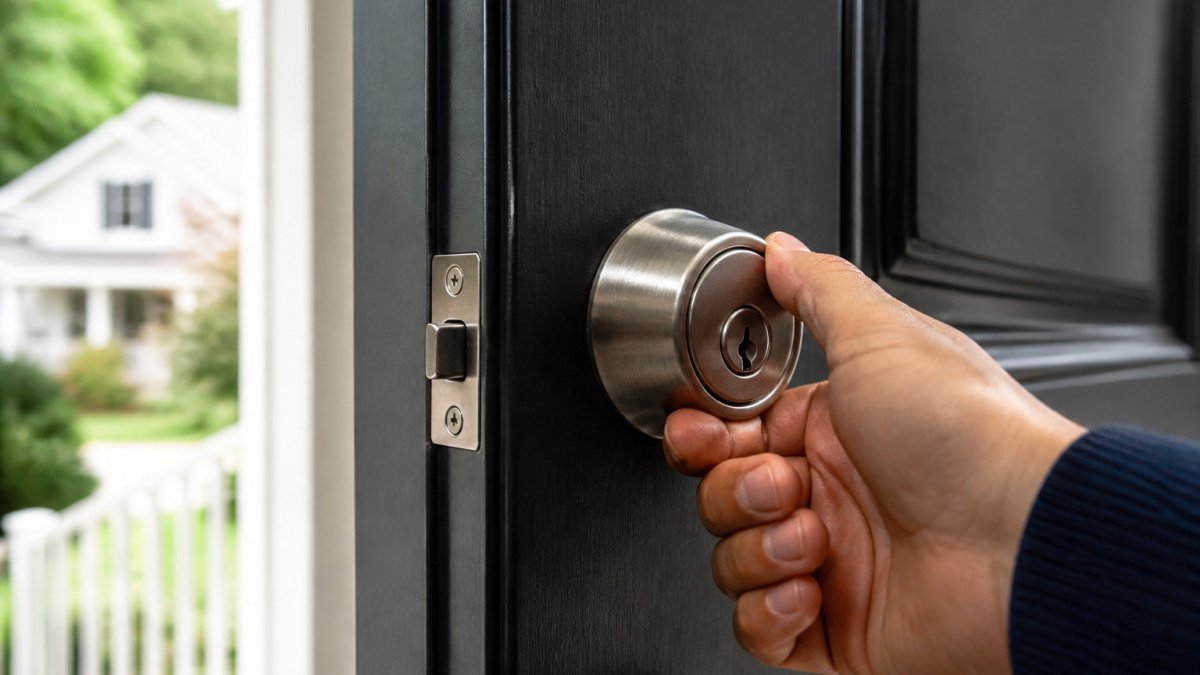
Most break-ins happen through doors that were never designed to resist a determined intruder. A standard deadbolt looks solid, but the cylinder and strike plate can be weak points. A high security deadbolt closes that gap by combining hardened components with a keyway that resists the tools burglars rely on most. Homeowners in Rio Linda often ask what actually makes one lock harder to defeat than another.
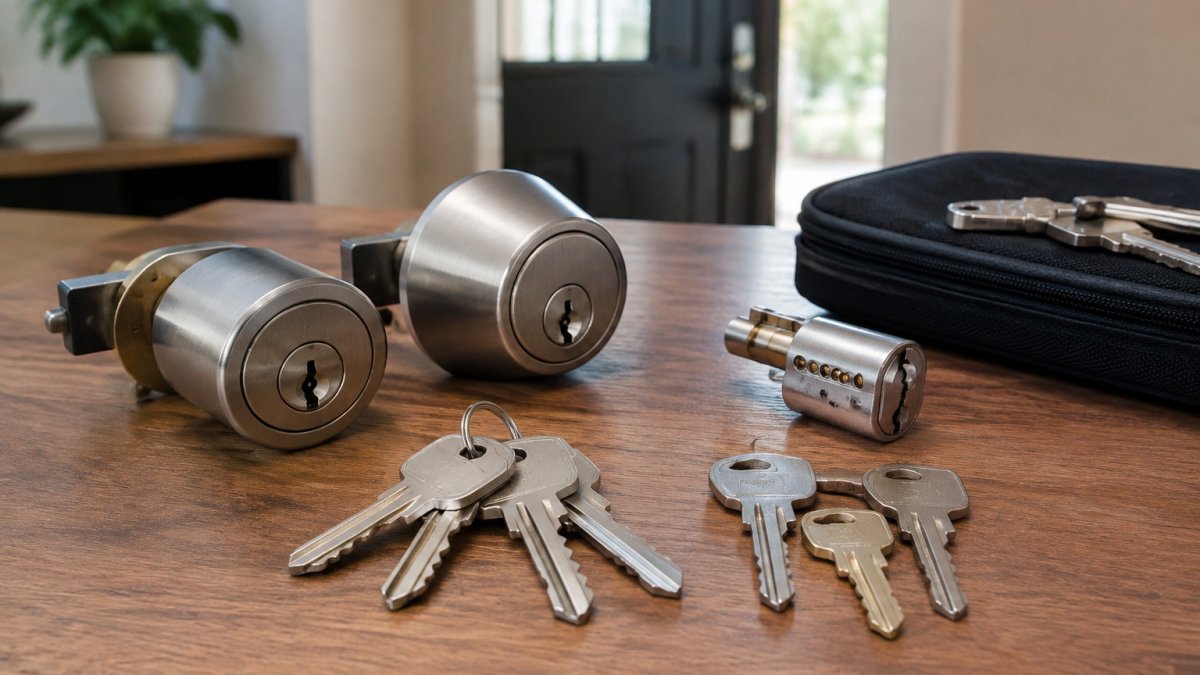
High security deadbolts are built around three layers of protection: pin mechanisms that resist manipulation, hardened materials that slow drilling, and restricted keyways that limit who can copy a key. Each layer addresses a different attack method.
Resistance to Lock Picking and Bumping
Lock picking and bumping are the two techniques intruders attempt most often on standard cylinders. Picking manipulates individual pins one at a time, while bumping uses a specially cut key to jolt the pins into alignment.
High security cylinders are designed to counter both methods with security pins that are shaped or spring-loaded to bind unevenly, making each pin harder to set. A common mistake is assuming any "pick-resistant" label means the lock is immune. Check the manufacturer's stated resistance and ask whether the product has been independently tested.
Resistance to Drilling and Forced Entry
Drilling attacks target the cylinder body directly. High security deadbolts typically include hardened steel pins or plates inside the cylinder that stop or slow a drill bit. Anti-drill features add time, and time is what deters most intruders, since prolonged noise and effort increase the chance of discovery.
Forced entry, such as kicking or prying the door, depends heavily on the frame and strike plate rather than the lock alone. A strong deadbolt installed into a weak frame can still fail. We cover that vulnerability later in this guide.
Restricted Keyways and Controlled Key Duplication
A restricted keyway limits who can legally cut a copy of your key. Restricted keyways are designed to limit unauthorized copies of a key.
Controlled key systems matter most for households where keys have been handed to contractors, former tenants, or relatives. Without key control, you cannot be certain who holds a working copy. Landlords re-securing a unit after a former tenant leaves can look at an eviction rekey service that resets access so only current occupants hold keys. Restricted keys are typically more involved to replace, which is the trade-off for tighter control. Property managers handling several units can review a property management rekey service built for controlled keying across a portfolio.
High Security Deadbolts Versus Standard Locks
Standard deadbolts use simple pin tumbler cylinders with a standard keyway that is easy to duplicate at any hardware store. They work adequately for low-risk interior doors but offer limited resistance to deliberate attack.
High security deadbolts differ in four ways: hardened components, pick-resistant pin designs, restricted keyways, and tested resistance ratings. Standard locks are cheaper to replace and easier to find, which makes them a reasonable choice for some uses.
How to Evaluate Security Ratings and Certifications
Most lock packaging uses marketing language, "high security," "pick-proof," "maximum protection", that is not defined by any single authority. To compare products on verifiable criteria, you need to know which standard was tested, who tested it, and which attacks the test actually covers. A lock that passes a picking test has not necessarily been evaluated for drilling, bumping, or kick-in resistance.
The standards you are most likely to encounter
In the United States, the two most common reference points are ANSI/BHMA A156.5 (the standard for auxiliary locks, including deadbolts) and UL 437 (the standard for key locks, which includes resistance to picking, drilling, and impressioning). ANSI/BHMA assigns grades, Grade 1, Grade 2, and Grade 3, based on cycle testing, strength, and finish durability, with Grade 1 being the most demanding. UL 437 is often cited for cylinders that resist surreptitious entry techniques. In Europe, EN 1303 grades cylinders on a scale that includes resistance to drilling, picking, and bumping, and EN 12209 grades the lock mechanism itself.
A practical way to read a label is to ask three questions: Which standard is named? Which grade or class was achieved? And was the test performed by an independent laboratory rather than the manufacturer alone? A product that lists "ANSI/BHMA Grade 1" and "UL 437 listed" gives you something to verify; a product that lists only "high security" does not.
What the ratings do not measure
This is the part most buyers miss. Grades and certifications typically evaluate the lock hardware in isolation, the cylinder, the bolt, the mechanism. They do not measure how the deadbolt performs when installed in a hollow-core door, a rotting frame, or a strike plate held by half-inch screws. A Grade 1 deadbolt mounted in a weak assembly can still fail a kick-in. Ratings also do not measure key-control features such as restricted keyways, because those are a distribution and authorization system rather than a resistance test.
Watch out: a high grade on the cylinder does not mean the installed door is secure. Treat the rating as one input and inspect the frame, strike, and installation as separate variables.
How to compare two products side by side
When you have two deadbolts in front of you, line up the same four data points: the named standard and grade, the specific attack methods tested (picking, bumping, drilling, forced entry), whether the cylinder uses a restricted keyway, and whether the manufacturer publishes replacement-part and key-duplication policies. If one product lists a standard and grade and the other lists only a slogan, the comparison is already decided.
Why Door Frames and Installation Matter as Much as the Lock
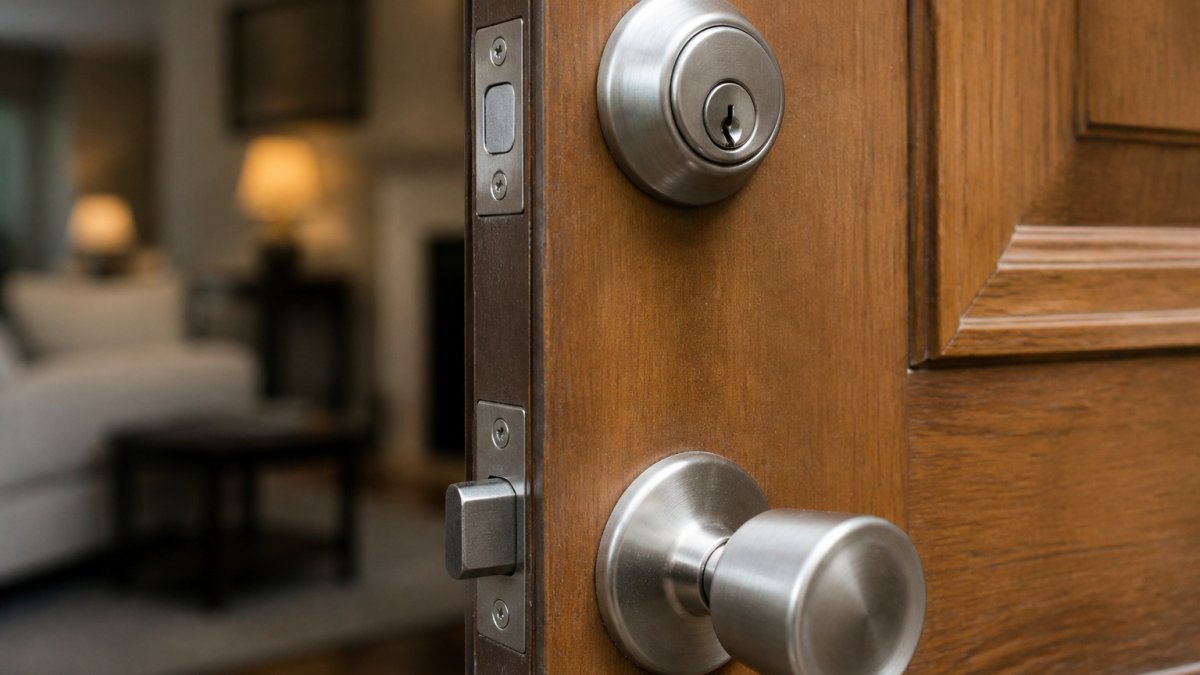
A high security cylinder cannot protect a door if the frame fails. Strike plates fastened with short screws into soft wood can be forced open with a single kick, regardless of how strong the bolt is. Reinforced strike plates with longer screws anchored into the stud are a practical upgrade that many homeowners overlook.
Correct installation also matters. A deadbolt that is misaligned will bind, encouraging users to force it, and it may not engage fully. Proper installation helps ensure the bolt throws correctly and the cylinder sits flush.
Trade-Offs, Costs and Choosing Between Mechanical and Electronic Models
The right deadbolt is not the most expensive one, it is the one whose failure modes match your household. Mechanical and electronic deadbolts fail in different ways, and the cost difference is mostly about what you are paying to avoid.
Mechanical high-security deadbolts
Mechanical models remain the most common choice for primary exterior doors. They have no batteries, no firmware, and no app dependency, so they work during power outages and after years of neglect. Their security comes from the cylinder design and the restricted keyway, and their maintenance is limited to occasional lubrication and a visual check of the bolt and strike. The main limitation is key management: every additional user means another physical key to track, and a lost restricted key typically requires reordering through the manufacturer or an authorized locksmith rather than cutting a copy at a hardware store.
Electronic and smart deadbolts
Electronic models trade mechanical simplicity for access management. Keyless entry, temporary codes for guests or contractors, auto-locking, and audit trails are genuinely useful for rentals, multi-generational households, and anyone who regularly hands out access. The trade-offs are real: batteries need replacement on a schedule, electronics can fail in extreme temperatures, and a dead battery or failed keypad can lock you out if there is no mechanical key override. Connectivity adds another layer, a smart lock tied to an app or hub depends on that ecosystem continuing to work and on your Wi-Fi or hub staying online.
Watch out: a smart lock with no physical key override is a single point of failure. Confirm the backup access method before you buy, and test it before you rely on it.
A simple decision framework
Ask four questions in order. First, who needs access and how often does that list change? Frequent turnover favors electronic. Second, what happens if the power or battery fails, is there a mechanical override you can live with? Third, how much key control do you need? A restricted mechanical keyway gives strong control with no electronics; a smart lock gives control through codes and permissions. Fourth, what is your realistic maintenance tolerance? Mechanical locks ask almost nothing; electronic locks ask for battery checks and occasional firmware attention.
What the cost actually consists of
Rather than quoting a single number, break the cost into its parts: the lock hardware itself, the cylinder and keyway upgrade if you choose restricted keys, installation labor, and any door or frame reinforcement needed to make the lock perform as rated. Restricted-key systems also carry an ongoing cost because replacement keys must be ordered through an authorized channel. Electronic models add battery and possibly hub or subscription costs over their life. A cheap lock installed in a weak frame is not a bargain, and an expensive lock on a door that does not close squarely will not deliver its rated protection. For a current quote on your specific door and requirements, contact The Key Shop And More or visit our website.
The article compares mechanical and electronic deadbolts on the points that matter most for everyday use.
| Factor | Mechanical deadbolt | Electronic or smart deadbolt |
|---|---|---|
| Power needs | None | Batteries need scheduled replacement |
| Maintenance | Occasional lubrication and visual check | Battery checks and occasional firmware attention |
| Access management | Physical keys for each user | Keyless entry, temporary codes, audit trails |
| Main limitation | Lost restricted key must be reordered | Dead battery or failed keypad can lock you out |
| Best for | Primary exterior doors with few users | Rentals and households that often change access |
Getting Your Next Deadbolt Installed or Rekeyed
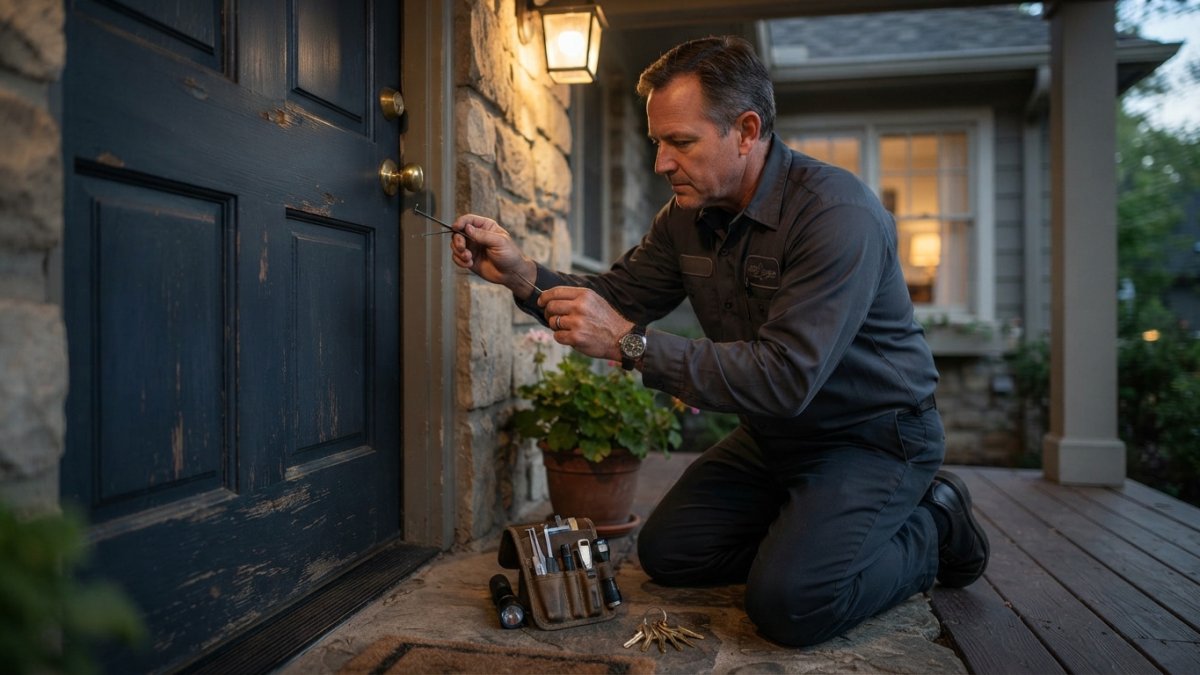
Whether you are replacing an old deadbolt or rekeying after a move, professional help ensures the lock is aligned, the strike plate is secured, and the key control you want is in place. Readers ready to book can schedule a residential rekey for their household's deadbolts. The Key Shop And More offers locksmith and key duplication services for Rio Linda residents.
Frequently Asked Questions
Are high security locks worth it?
For most homeowners and property managers, yes, provided the lock is installed correctly. A high security deadbolt adds resistance to picking, bumping and drilling, and its restricted keyway limits unauthorised key copies. The cost is higher than a standard deadbolt, but a lock is only as strong as the door frame and strike plate it is fixed into, so budget for proper installation too. Ask for a quote from The Key Shop And More for current pricing on the product and fitting you need.
Can high security deadbolt keys be duplicated?
Not freely. Restricted keyways are designed so that ordinary key-cutting machines cannot copy them. Copies of restricted keys are generally limited to authorised sources. This is why deadbolt key control matters: keep a record of who holds each key, and rekey the lock if a key is lost or a former tenant or employee still has access.
How are high security deadbolts different from standard deadbolts?
The main differences are the pin design, the keyway and the cylinder construction. High security cylinders use more complex pin stacks and hardened components that resist picking and bumping, and restricted keyways that limit copying. Standard deadbolts are usually cheaper and adequate for low-risk interior doors, but they offer less protection against determined attempts to force entry. A certified rating helps you compare the two objectively.
Do high-security deadbolts prevent lock picking?
They make picking and bumping much harder and slower, but no lock is entirely pick-proof. Pick-resistant deadbolts use security pins, spool or serrated pins and tighter manufacturing tolerances to frustrate common techniques. Even the best cylinder can be defeated if the door frame splits or the strike plate is loose, so resistance depends on the whole assembly. Choose a lock with a recognised security rating and have it fitted correctly.