 ultimate-guide
Commercial Master Key System Installation Guide
Quick Summary
A commercial master key system is a lock arrangement in which one master key opens every door in a building, while each lock also responds to its own change key. Installation runs from a site survey and door inventory through a keying schedule, cylinder pinning, testing every key and documented handover.
- Build the hierarchy from three layers: change keys, subordinate keys and a master key.
- Walk and photograph every door before ordering hardware to record its lock preparation and cylinder type.
- Confirm each cylinder supports master keying before committing to a design or quote.
- Pin cylinders to the keying schedule at the bench, labeled by door number, before installation.
- Test every key at the doors it should open and the doors it should not before handover.
Table of Contents
- What a Commercial Master Key System Is and How It Works
- Planning a Master Key Hierarchy for Your Building
- Step-by-Step Installation: From Site Survey to Handover
- Master Key System Cost and What Drives the Budget
- Commercial Lock Rekeying for Existing Buildings
- Key Control Policy, Security Trade-offs and Lost-Key Response
- Booking Your Commercial Master Key Installation With The Key Shop And More
- Frequently Asked Questions
What a Commercial Master Key System Is and How It Works
Last Updated: October 28, 2026
A commercial master key system is a lock arrangement in which one key opens every door in a building or defined group of doors, while each lock also responds to its own dedicated key. Facilities staff, managers and security personnel can then move through a property without carrying a separate key for every room.
Master keys, subordinate keys and change keys
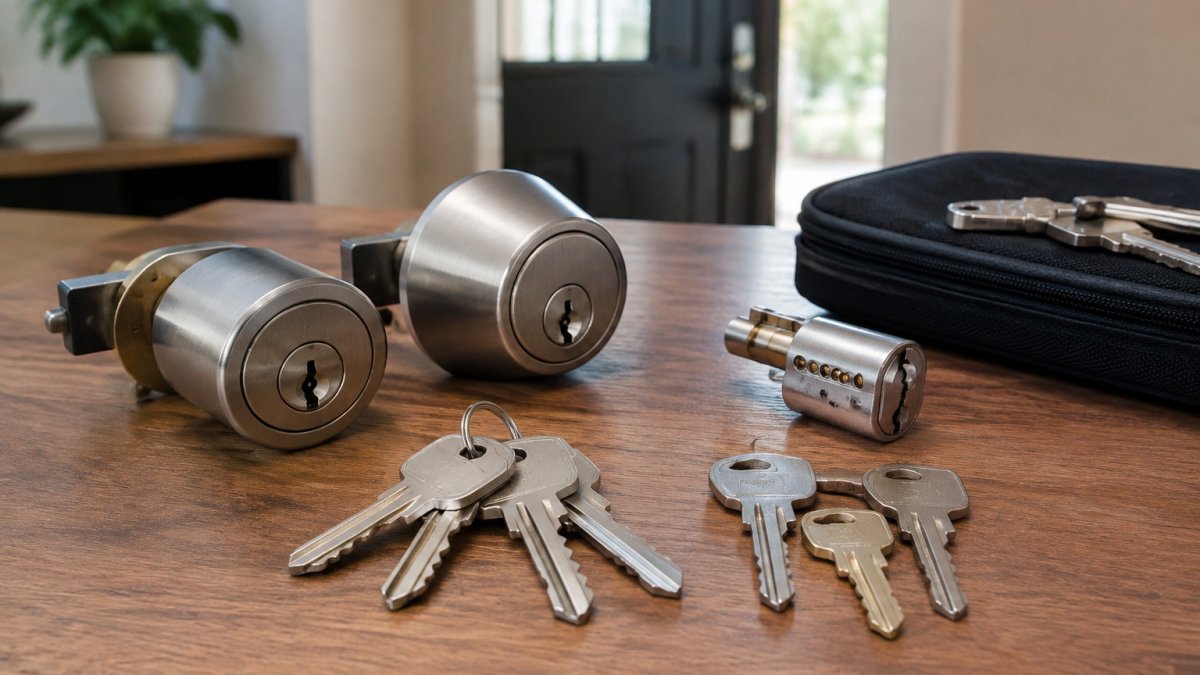
Every master key system is built from three layers of keys. A change key opens exactly one lock and no other. A subordinate key (sometimes called a sub-master) opens a group of locks, such as all the offices on one floor. The master key sits at the top and opens every lock in the system.
The hierarchy works because each lock contains multiple pin stacks, cut so a key matching its pattern lifts the pins to the shear line. Master-system locks carry an extra set of pins, so a master key and a change key can each align the same cylinder.
Master-keyed versus keyed-alike locks
Keyed-alike locks are different: every cylinder accepts the same key, so there is no hierarchy and no way to limit access to a subset of doors. Keyed-alike suits a small office where everyone needs the same access; a master-keyed system suits buildings where different people need different levels of access.
Planning a Master Key Hierarchy for Your Building
Planning is where most commercial systems succeed or fail. A poorly planned hierarchy either gives staff too little access or lets too many people into restricted areas. Before any hardware is ordered, map the building layout and the roles of its users.
Determining the size and scope of the system
List every door, the room it serves and how often it is used, separating exterior doors, shared corridors, restricted rooms (server rooms, cash handling, hazardous materials storage) and general offices. Count the change keys each person needs. Plan for growth: a system designed for 40 keys today will often need to expand within a few years, and rebuilding later costs far more than building in spare capacity now.
Key hierarchies and access levels by role
Define access levels by role rather than by person, so the system stays manageable when staff change. A typical structure has four tiers:
- Owner or building master: opens every lock, held by a small number of senior people.
- Facilities or department sub-master: opens all locks within one floor or department.
- Team-level keys: open shared areas plus a team's own rooms.
- Individual change keys: open one assigned door, such as a personal office.
Write this down as a keying schedule that lists each door, which sub-master it belongs to, and which roles hold each key. This document is the foundation for every later step, including audits and lost-key response.
Step-by-Step Installation: From Site Survey to Handover
A commercial master key installation can involve several stages. The following sections describe considerations for planning and installation.
Stage 1: Site survey and door inventory
The survey is a physical walk of every door joining the system. For each door, record:
- Door material and construction, wood, hollow metal, aluminum storefront, or glass. This determines the lock body and cylinder type that will fit.
- Existing lock preparation, mortise lock, cylindrical bored lock, rim exit device, or narrow-stile hardware. Note the brand and model where visible.
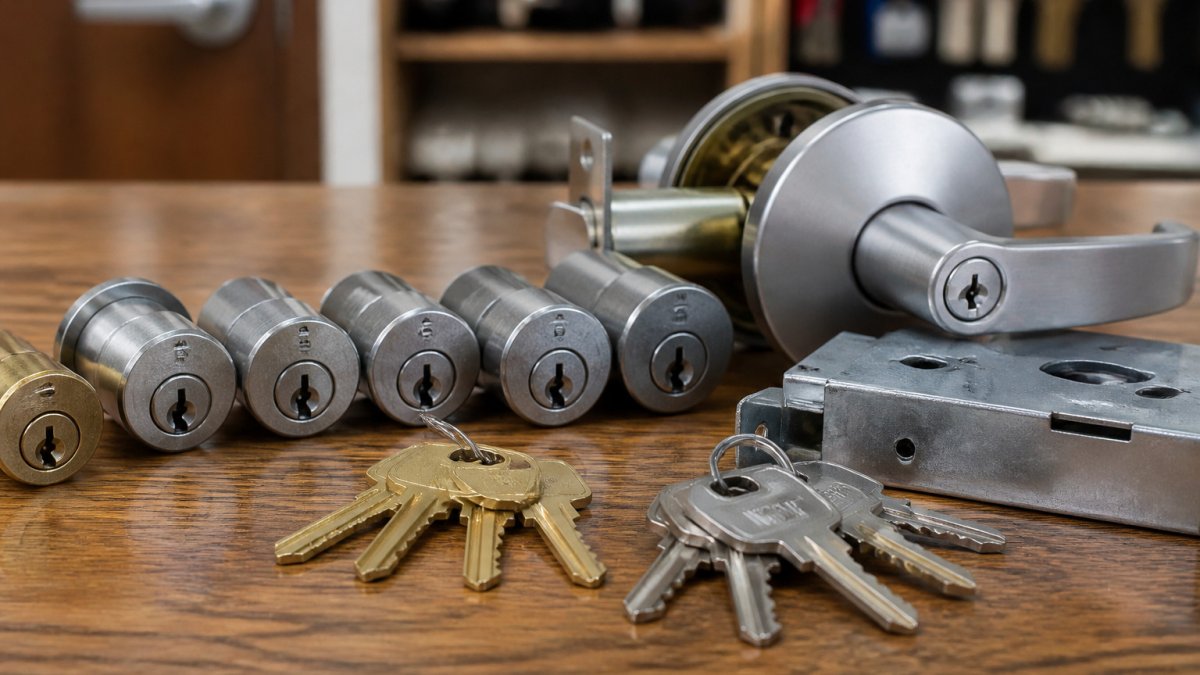
- Cylinder type and length, key-in-knob, key-in-lever, mortise cylinder, rim cylinder, or interchangeable core (IC). Measure the cylinder length and note the cam orientation.
Photograph each door and label the photo with the door number. This photo log becomes the reference for the keying schedule and for later audits.
Stage 2: Lock and cylinder compatibility checks
Not every lock can join a master system. Before committing, confirm:
- The cylinder's manufacturer supports master keying and offers the pin chambers needed for the design's key levels; a two-level system needs fewer chambers than a four-level system.
- The existing keyway is not restricted or proprietary, since those usually require the manufacturer or an authorized dealer to supply blanks and cut keys.
- Older mechanical locks with worn pin chambers may not hold reliable master keying; replace the cylinder rather than repinning it.
Flag any door that needs full hardware replacement rather than rekeying. Those items change the budget and the schedule, so they should be identified before the quote is finalized, not after work begins.
Stage 3: Finalize the keying schedule
The keying schedule is the master document: every door, its cylinder, its change key, its sub-master group and the master key above that, plus every key to be cut and who will hold it. The locksmith pins cylinders against it, and the building owner keeps it after handover. A system installed without a written schedule is undocumented the day it is finished.
Stage 4: Pin or replace cylinders
Cylinders are pinned to the schedule at the bench, not at the door. Each is pinned to accept its change key, its sub-master and the master key, then labeled with the door number, which keeps the work clean and makes testing easy before installation. Cylinders that cannot be repinned to the required configuration are replaced with new ones pinned to the same schedule.
Stage 5: Install and test every key at every door
After installation, test each key against every door it should open, and the doors it should not. A change key that operates a neighboring door is a pinning error, far cheaper to catch at handover than after keys are distributed. Test the master key at every door, each sub-master across its group, and each change key at its own door only.
Stage 6: Handover and records
Handover is a documented event. The building owner receives:
- The signed keying schedule.
- A key inventory listing every key cut, its level, and who received it.
- A signed receipt for each key issued.
Keep the handover package in the building's maintenance records; it is the reference for every future rekey, lost-key response and access review.

The installation follows a set sequence, from the site survey through to handover, as summarised below.
| Stage | What to do | Key check |
|---|---|---|
| Site survey and door inventory | Walk and photograph every door, recording door material, lock preparation, cylinder type and egress status | Label photos with the door number |
| Lock and cylinder compatibility checks | Confirm master keying support, keyway restrictions and whether older cylinders can be repinned | Flag doors needing full hardware replacement |
| Finalize the keying schedule | List every door, its cylinder, change key, sub-master and master key | Keep the schedule as the master document |
| Pin or replace cylinders | Pin cylinders at the bench to the schedule, labeled by door number | Replace cylinders that cannot be repinned |
| Install and test every key | Test master, sub-master and change keys at the doors they should and should not open | Catch pinning errors before handover |
| Handover and records | Provide the signed schedule, key inventory, signed receipts and as-built door list | Store the package in maintenance records |
Master Key System Cost and What Drives the Budget
Pricing depends on the number of doors, cylinders replaced versus rekeyed, keys to cut, hierarchy complexity and any hardware upgrades. For current pricing, contact The Key Shop And More directly.
Commercial Lock Rekeying for Existing Buildings
Many businesses do not need a full new system.
Rekeying an existing building is most effective when the original master system is still documented. Where no record exists, the locksmith may need to recreate the hierarchy from scratch. A reader rekeying an existing building may want to learn more about rekeying services.
Key Control Policy, Security Trade-offs and Lost-Key Response
A master key system is only as secure as the control placed on its keys. The central trade-off is concentration of risk: the more doors a single key opens, the more damaging it is when that key is lost, copied, or misused. A building master that opens every door is convenient for facilities staff and catastrophic in the wrong hands.
How hierarchy depth affects security
Every additional key level adds convenience and risk. A two-level system (master plus change keys) is simple and easy to audit; a four-level system (master, sub-master, team key, change key) gives finer control but more keys to track and more chances for one to be copied or lost. Three levels cover most commercial buildings; deeper hierarchies should be justified by real operational need, not added by default.
Restricted keyways and duplication control
The single most effective control on a mechanical master system is a restricted keyway, which uses a key blank unavailable through ordinary channels, so copies can only be made by the locksmith or dealer holding the restriction. It will not stop a determined lock picker, but it stops the far more common problem: a staff member copying a master key at a hardware store and handing it to someone who should not have it.
A workable duplication policy states:
- Which key levels may be duplicated, and by whom.
- That master and sub-master keys are never duplicated without a signed authorization from the building owner or facilities manager.
- That all duplication goes through the installing locksmith or an authorized dealer.
The key register and issue/return discipline
The key register is the operational backbone: every key recorded by number, level, door or group, holder, issue date and return date. Master and sub-master keys are signed out and back in, never kept informally in a drawer. Review the register annually to confirm each holder still needs their keys, and check it at offboarding too, since staff turnover is the most common source of unreturned keys.
Lost-key response: scope before you rekey
When a key is lost, the first step is to check the register to see exactly which doors that key operated. That determines the scope of the response:
- A change key affects one door. Rekey that cylinder and reissue the key.
- A sub-master affects one group. Rekey the cylinders in that group and reissue the sub-master and the change keys beneath it.
- A master key affects the whole system. The decision is whether to rekey every cylinder or to accept the risk and monitor. Rekeying the whole building is disruptive and expensive, which is why the original hierarchy design, and the register, matter so much.
Maintenance and periodic audits
A master key system is not a one-time installation. Schedule an annual review of the key register, confirm cylinders still operate cleanly, and check that doors on egress paths still function as required. Rekey when staff turnover, a lost key or a change of building use makes the hierarchy inaccurate, scheduled maintenance keeps the system reliable rather than waiting for a problem to force the issue.
Booking Your Commercial Master Key Installation With The Key Shop And More
The Key Shop And More provides locksmith and key duplication services, including commercial rekeying and master key systems. Visit our Services page to learn more.
Frequently Asked Questions
What is a commercial master key system?
A commercial master key system is a locking arrangement where one master key opens every door in a building, while subordinate keys open only defined groups of doors and change keys open a single door. Each lock has a set of pins that respond to several different keys, so one lock can be opened by more than one key cut to a different bitting. Businesses use this structure so that staff carry fewer keys, managers keep access where they need it, and the owner can recover control of the building when keys go missing. A key hierarchy defines which keys open which locks.
How much does commercial master key system installation cost?
For current pricing, contact The Key Shop And More through its website.
How long does it take to install a commercial master key system?
Installation timing depends on the project. Contact The Key Shop And More to ask about timing.
Can a master key system be rekeyed or expanded?
The Key Shop And More offers commercial rekeying and master key systems. Contact the business to ask about your property's needs.
What is the difference between a master key and a grand master key?
A master key opens a defined group of locks, usually a department, floor or tenant space. A grand master key sits one level higher and opens all the groups below it, meaning every subordinate and master key lock in the system. Many buildings use a grand master only for building management or emergency access, and keep it tightly controlled. Each extra level adds complexity to the keying plan, so the number of levels should match the real access structure of the site.
How do you manage and secure keys in a commercial master key system?
Key control policies can record who holds each key, which doors it opens, and how keys are issued and returned. Contact The Key Shop And More to ask about its commercial rekeying and master key systems.