 how-to
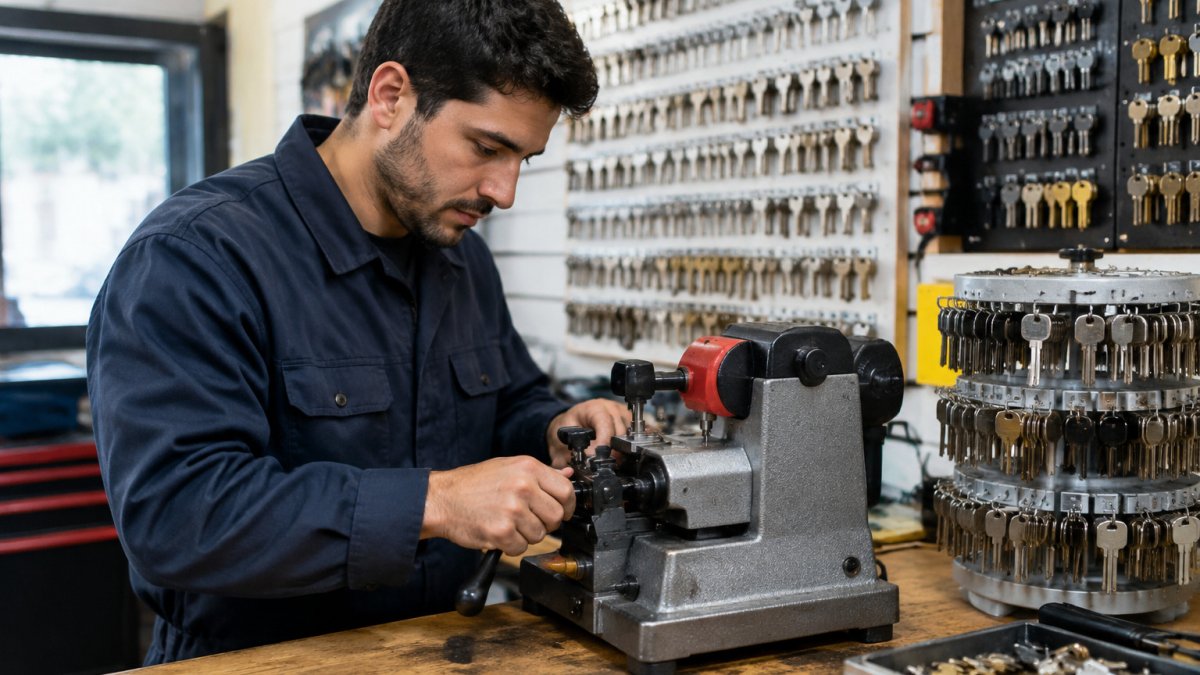
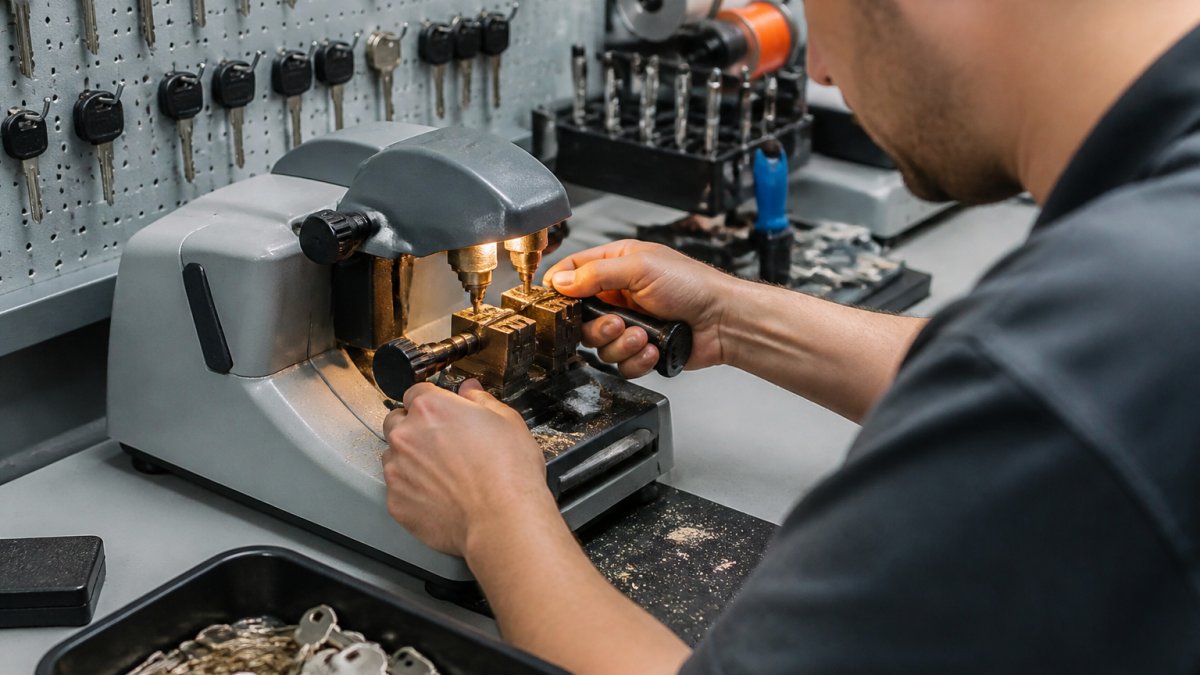
Can a Locksmith Copy High-Security Keys
Table of Contents
- What Makes a Key High-Security
- Can a Locksmith Copy High-Security Keys
- High-Security Key Duplication: Authorization and Restrictions
- Restricted Key Duplication: Understanding Copy Protection
- High-Security Key Card Requirements and Verification
- High-Security Key Replacement: Options When Duplication Is Refused
- What to Expect: Timeline, Cost, and Next Steps
- Frequently Asked Questions
Last Updated: October 19, 2026
What Makes a Key High-Security
A high-security key is designed with advanced anti-duplication features to prevent unauthorized copying, which is why many property owners restrict who can locksmith copy high-security keys. These keys use specialized cuts, unique keyways, and patented designs that make them harder to replicate than standard keys.
Common types include laser-cut keys, which use intricate patterns cut with laser technology and are much harder to reproduce than traditional keys, and restricted keys, which use proprietary key blanks only authorized dealers can access. Some systems combine both features for maximum protection.
The purpose is clear: control who has access to a property or asset. Property owners and businesses use them to prevent unauthorized duplication, if anyone could walk into a locksmith and copy a high-security key, the security system would fail.
Can a Locksmith Copy High-Security Keys
The answer depends on authorization and the specific key system. Some high-security keys can be duplicated by a locksmith. Others cannot, even if you own the original key.
Just because you have a high-security key doesn't automatically mean you can copy it. The locksmith needs three things: the original key, proof that you own it or have permission to duplicate it, and access to the correct key blank or authorization from the manufacturer.
When Locksmiths Can Duplicate High-Security Keys
Locksmiths can copy high-security keys when you meet the authorization requirements. If you have the original key and can prove ownership, most locksmiths will duplicate it for you.
The typical process: bring the original key and proof of ownership to a locksmith, who examines the key to identify the system and manufacturer. Some systems require a security card issued by the manufacturer or property owner, which the locksmith verifies before proceeding.
Common scenarios where duplication works:
- You lost your house key and need a spare
- You're a tenant with written permission from your landlord
- You own a commercial property and need additional copies for employees
- The manufacturer's key control system allows duplication with proof of ownership
The locksmith's role is to verify authorization and cut precise copies that work with your lock cylinder.
When Locksmiths Cannot Duplicate High-Security Keys
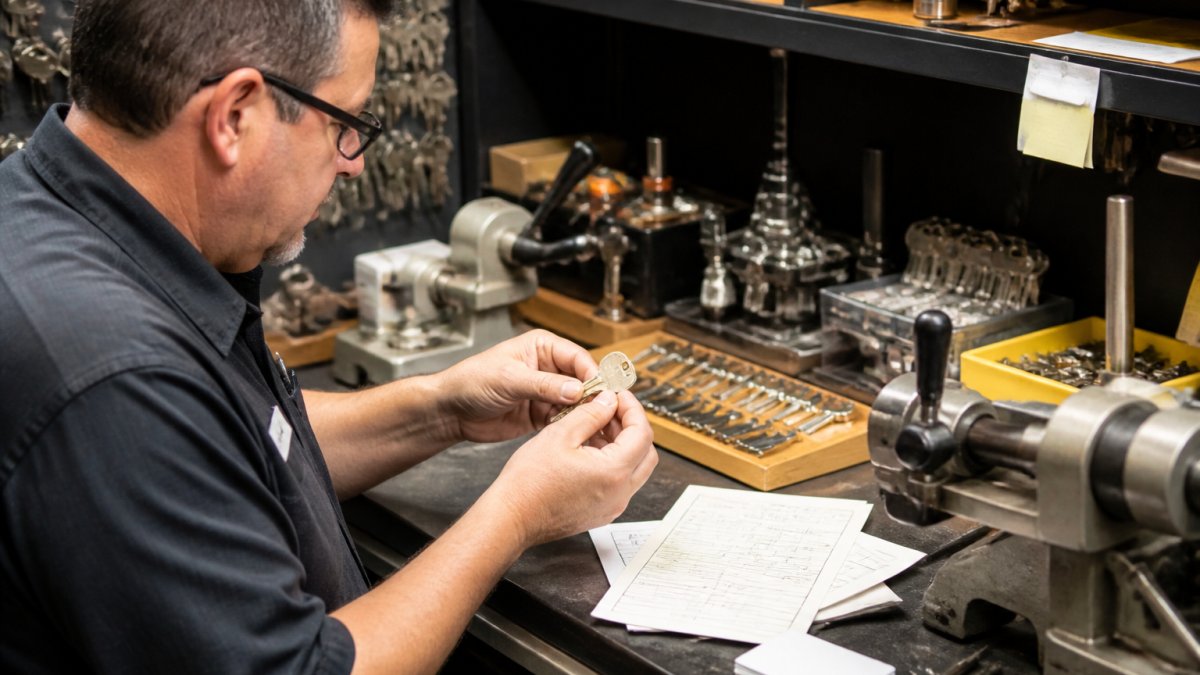
Locksmiths cannot copy high-security keys when the system is restricted or you lack authorization. Many manufacturers intentionally limit key blank availability to prevent unauthorized duplication.
If a keyway is patented and restricted, the locksmith doesn't have access to the correct blank and cannot order it from suppliers, some manufacturers only sell blanks to authorized dealers, which may not include your local locksmith.
Situations where duplication is refused:
- No proof of ownership or authorization available
- The key system requires a security card you don't have
- The manufacturer restricts blanks to specific authorized dealers
- The do-not-duplicate marking is present and the locksmith follows the restriction
- You're not the registered owner of the lock system
A responsible locksmith will refuse to copy a key when authorization is unclear, protecting both you and the property owner. Copying without proper authorization could be illegal depending on your jurisdiction.
High-Security Key Duplication: Authorization and Restrictions
Authorization is the foundation of high-security key duplication, without it, no legitimate locksmith will copy your key, even if you have the original. But "authorization" varies by key system, manufacturer, and dealer policy, so understanding what counts for your system is the difference between a quick copy and a wasted trip.
What You Need to Bring
Bring the original key to your appointment, the locksmith needs to examine it, identify the system, and determine whether duplication is possible.
You should also bring proof of ownership or authorization. This might include:
- A property deed or lease agreement
- Identification matching the registered owner
- A security card issued by the manufacturer
- Written permission from the property owner
- Proof of purchase or registration documentation
Tenants should bring a letter from the landlord authorizing duplication; business owners should bring documentation showing they own the lock system. The more documentation you have, the faster the process moves.
Contact the locksmith before your appointment and ask what specific documents they need. Different systems require different proof. This saves time and prevents a wasted trip.
Proof of Ownership and Authorization
Locksmiths verify proof of ownership to prevent unauthorized duplication and protect the property's security.
The process is straightforward: you present identification and ownership documentation, and the locksmith confirms your name matches the registered owner or that you have written authorization. Some systems require the locksmith to contact the manufacturer or authorized dealer to verify your status.
If you cannot provide proof, the locksmith will refuse, the correct response, since duplication without verification could expose you to legal liability and compromise security.
Some systems issue security cards specifically for this purpose, authorizing duplication and proving permission. If yours uses one, keep it safe, you'll need it to duplicate keys in the future.
System-Specific Authorization: What Varies by Brand and Dealer
Authorization requirements depend on the key system, manufacturer policies, and the individual locksmith or dealer's procedures. Check these before you go:
- Manufacturer restrictions: Some manufacturers (e.g., Medeco, Mul-T-Lock, ASSA) restrict key blanks to authorized dealers only. A general locksmith may not have access to blanks or cutting equipment for these systems. Check the manufacturer's website for a dealer locator.
- Dealer policies: Even among authorized dealers, policies differ. Some require the original security card and photo ID; others accept a notarized authorization letter from the property owner. Ask the specific dealer what they require.
- Property management rules: In rental or commercial settings, the property manager may have a designated locksmith or require internal approval before any duplication. Contact the property manager first.
- Institutional systems: Hospitals, schools, and government buildings often have key control policies that prohibit outside duplication entirely. Keys must be ordered through the facilities department.
The more restricted the keyway, the more documentation you'll need. If unsure, contact the manufacturer or property manager, they can tell you who is authorized to cut keys for your system.
Legal and Policy Distinctions
Authorization can be a legal or contractual matter. A stamped "Do Not Duplicate" message is a request that may not be enforceable on its own, but duplicating a restricted key without authorization may violate the manufacturer's terms, your lease, or your employment agreement, and in some jurisdictions can be a criminal offense. Always get explicit permission.
Restricted Key Duplication: Understanding Copy Protection
Restricted key duplication refers to limitations manufacturers place on copying certain keys, built into the system to maintain security and control access.
Manufacturers restrict duplication through several methods: patented keyways prevent unauthorized blanks from being cut, do-not-duplicate markings tell locksmiths not to copy, some systems use key codes only authorized dealers can access, and others require a security card for verification.
The purpose is straightforward: the property owner wants to control who has copies. If anyone could duplicate a key without restriction, the security system would be meaningless.
Common restricted key systems include:
- Master key systems used by property managers
- Commercial access control systems
- High-end residential security systems
- Automotive key systems
- Institutional locks in hospitals, schools, and offices
When you encounter a restricted key, respect the restriction, bypassing it could violate the manufacturer's terms and create legal problems. Work with the property owner or authorized dealer to get copies through proper channels.
High-Security Key Card Requirements and Verification
Many high-security key systems issue security cards to authorized users. The card proves you have permission to duplicate keys in that system.
The card typically includes information about the key system, the authorized user's name, and sometimes a key code. Bringing it to a locksmith lets them verify your authorization quickly, and some can contact the manufacturer to validate the card electronically.
If you have a security card, keep it with your original key. Both are needed to duplicate keys in the future. If you lose the card, contact the property owner or manufacturer to request a replacement.
Without a security card, you'll need other proof of ownership or authorization. Identification and property documentation work, but they require more verification time. The security card simplifies the process.
High-Security Key Replacement: Options When Duplication Is Refused
Sometimes a locksmith cannot duplicate your high-security key. This happens when the system is restricted or authorization cannot be verified.
Reach out to the manufacturer or authorized dealer. Many high-security systems have authorized dealers who can cut keys with proper verification.
Rekey your lock. If you own the property and cannot duplicate the key for any reason, rekeying is an option.
Use a professional locksmith service. Use a professional locksmith service. We can help you navigate authorization requirements and find the right solution for your situation.
The key is to plan ahead. If you know you'll need spare keys, address it before you actually need them.
What to Expect: Timeline, Cost, and Next Steps
Understanding the timeline and process helps you prepare. High-security key duplication takes longer than copying a standard house key.
Timeline expectations:
- Simple duplication with proof of ownership: 1-3 business days
- Systems requiring manufacturer verification: 3-7 business days
- Authorization through property owner: depends on their response time
- Rekeying or lock replacement: 1-2 weeks depending on complexity
The exact timeline depends on the system, your documentation, and whether manufacturer contact is needed.
What happens next: First, contact a locksmith and describe your situation. Bring the original key and any documentation you have. The locksmith examines the key and determines what's possible.
Steps to take right now:
- Locate your original key and any security cards
- Gather ownership or authorization documentation
- Call a locksmith to discuss your specific situation
- Ask about their experience with high-security systems
- Confirm what documentation they need before your appointment
Planning ahead prevents frustration. If you need spare keys, start the process before you actually need them. This gives you time to gather documentation and work through authorization channels without pressure.
Contact us to discuss your situation and find the right solution for your needs.
Getting locked out or losing a key creates real stress. High-security systems protect your property but also add complexity to key duplication.
Frequently Asked Questions
Can a locksmith copy a high-security key without the original?
No. A locksmith needs the original high-security key to duplicate it. The original key provides the exact cuts, depth, and profile required for accurate duplication. If you've lost your original key, you'll need to contact the manufacturer or authorized dealer with proof of ownership to obtain a replacement or a key blank that matches your lock cylinder.
What authorization do I need to get a high-security key duplicated?
You'll typically need proof of ownership or authorization. For residential keys, this might be a lease agreement or property deed. For commercial systems, the property owner or authorized manager must approve duplication. Many locksmiths will ask for identification and may require a security card issued by the key manufacturer. Authorization requirements vary by manufacturer and key system, so contact your locksmith or the original key issuer for specific requirements.
What's the difference between a high-security key and a do-not-duplicate key?
A do-not-duplicate key has a marking or stamp indicating it should not be copied, but it lacks the advanced security features of a true high-security key. High-security keys include physical features like laser cuts, restricted keyways, or patented profiles that prevent unauthorized copying. Do-not-duplicate keys rely on the locksmith's compliance with the marking; high-security keys use mechanical design to physically resist duplication by unauthorized parties.
How long does it take to get a high-security key duplicated?
Turnaround depends on authorization and key type. If authorization is immediate and the locksmith has the correct key blank in stock, duplication may take 15-30 minutes. If authorization requires verification from the manufacturer or property owner, or if the key blank must be ordered, the process can take several days to a week. Contact your locksmith for a specific timeline based on your key system and authorization status.