 how-to
How to Duplicate a Worn Out House Key Accurately
Last Updated: November 8, 2026
Quick Summary
To duplicate a worn out house key accurately, first clean the original and inspect its cuts against a light, since a worn key copied as-is reproduces its defects. If several teeth are badly rounded, ask the cutter to decode the lock or work from a key code so the new key matches factory dimensions. Always test the copy in the lock on the actual door before you leave.
- Wipe and brush dirt out of the original key's grooves before any cutting.
- Copying a worn key reproduces its defects, so the copy may fail sooner.
- Decoding the lock or using a key code cuts a fresh key to factory dimensions.
- Never let a bent key be copied until it is straightened or replaced.
- Self-service machines do not inspect the key, so they risk a faulty copy.
Table of Contents
- Why a Worn Out House Key Is Hard to Copy
- Diagnose Whether the Key or the Lock Is the Problem
- How to Get a New House Key Made Without the Original
- Step by Step: How to Duplicate a Worn Out House Key
- Duplicate Worn Out House Key Cost and Turnaround by Method
- Home Depot Key Copy: What to Expect With a Worn Key
- Finding Someone to Duplicate a Worn Out House Key Near You
- Booking Your Key Copy With The Key Shop And More
- Frequently Asked Questions
Why a Worn Out House Key Is Hard to Copy
A worn out house key is hard to duplicate because the cutting machine copies the key's current shape, including every groove that has been rubbed down over years of use. Most cutters trace the original key, so a worn key produces a copy that is slightly off. The copy may turn in the lock stiffly, or not at all. If you are searching for a way to duplicate a worn out house key, know that the problem usually lies in the original, not in your request.
The first step with a worn key is to check the original before cutting anything. Look at the cut depths. Look at the edges. A key that is smooth and rounded on its teeth has lost the precise shape the lock needs, and copying it will only copy that loss.
Three things make worn keys difficult:
- Rounded or flattened cuts. Each cut depth must be exact. Wear shaves these depths down.
- Burrs and bent blades. A bent key can sit at the wrong angle in the machine and cut crooked.
- Dirt packed into the bitting. Grime changes how the key clamps in the machine.
A worn key still has value as a template, but only if the cutter first checks and cleans it.
Diagnose Whether the Key or the Lock Is the Problem
Before you pay for a copy, decide whether the key or the lock is causing the trouble. A key that works poorly may be worn, but a lock that has worn internally can produce the same symptoms even with a perfect key.
Try these checks at home:
- Test the key on the lock in both directions. If it turns only from one side, the bitting may be worn.
- Look for shiny or polished spots on the teeth. These show where the key has rubbed the pins.
- Lubricate the lock lightly. Use a dry graphite lubricant, not oil. If the key then turns freely, dirt was the issue.
- Try a spare key, if you have one. If it works and the original does not, the original is the problem.
If the spare key also fails, or if the lock feels gritty or sticks even with lubrication, the lock itself may need service. In that case a copy of the worn key will not solve the problem. Call a professional to inspect the cylinder.
Watch out: forcing a stuck key can snap it off in the lock. If the key will not turn, stop and seek help rather than applying more force.
How to Get a New House Key Made Without the Original
You can get a new house key made without the original, but the route depends on the lock. Many standard residential keys carry a stamped key code, usually a short set of letters and numbers on the bow or the blade. Cutting services can use that code to order and cut a blank that matches the lock.
Here is what to expect:
- Look for a key code. Check the face of the key and the lock cylinder. A code printed on the key lets a cutter find the correct blank.
- Bring proof you have the right to the lock. A cutter will usually ask for ownership proof, such as a deed, lease, or photo ID with the address.
- Ask whether the lock can be rekeyed. If there is no code and no original, a new key may only be possible by rekeying the lock to a fresh key set.
Some keys cannot be copied routinely. High-security locks, restricted keyways, and some older cylinders need the manufacturer's paperwork or a specialist. The Key Shop And More can tell you which path applies to your lock before you commit.
Step by Step: How to Duplicate a Worn Out House Key
When the original key still works well enough to use as a template, follow these steps to get the most accurate copy.
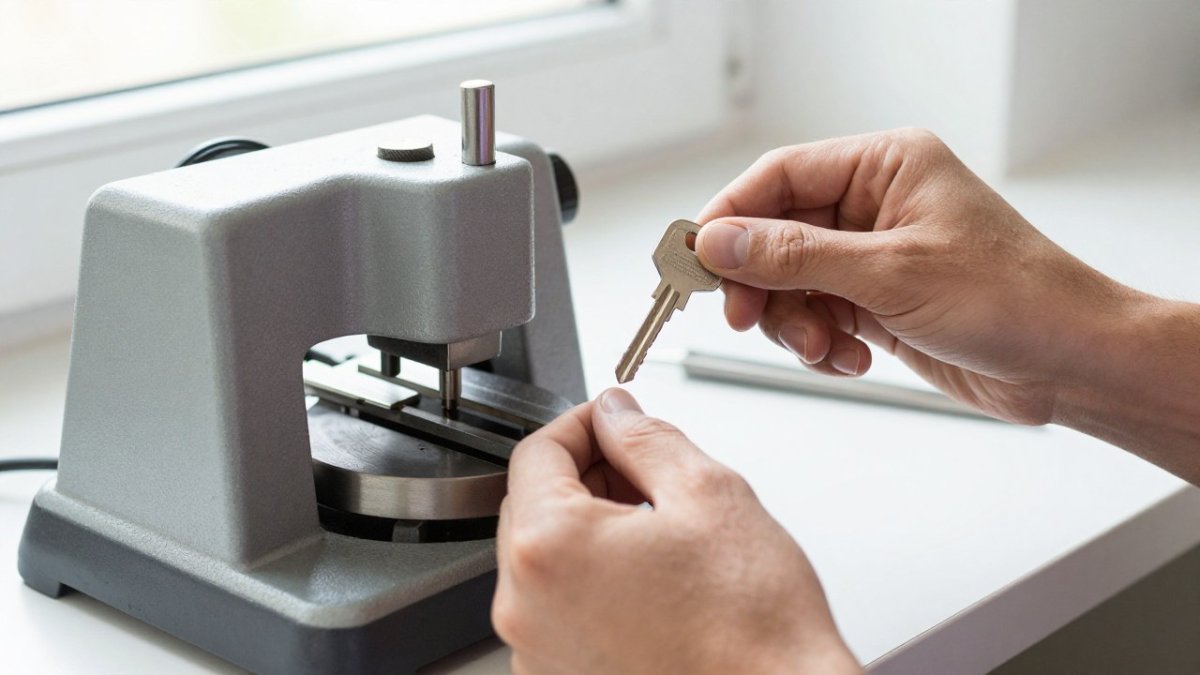
Step 1: Clean the original. Wipe the key with a dry cloth and work any packed dirt out of the grooves with a soft brush or a toothpick.
Step 2: Inspect the cuts against a light. Hold the key edge-on and look at each tooth. A healthy cut has a flat bottom and a sharp shoulder.
Step 3: Decide whether to copy or originate. This is the step most guides skip. Copying a worn key reproduces its defects, so the copy may work today and fail sooner than the original did.
Step 4: Choose the right blank. Match the blank to the original's keyway and profile. A blank with the wrong groove pattern will not enter the lock no matter how well it is cut.
Step 5: Let the cutter compensate for mild wear. A skilled operator can adjust the machine's depth settings slightly to account for rounded teeth, or make a second pass with a light touch.
Step 6: Test the copy before you leave. Turn it in the lock in both directions several times. It should turn smoothly without lifting, jiggling, or sticking.
Step 7: Compare the two keys side by side. Hold the worn original and the new copy edge to edge. The cut depths should match. If the copy feels different in the lock, return to the cutter immediately.
Watch out: if the original key is bent, do not let anyone copy it until it is straightened or replaced.
Most of these steps take a few minutes at a counter. A worn key may need an extra pass or a decode, so plan for a little extra time and ask before you commit.
Duplicate Worn Out House Key Cost and Turnaround by Method
Pricing for a worn key copy depends on the method, the key type, and whether the cutter has to re-cut or originate a key. Contact The Key Shop And More for current pricing and a quote specific to your key.
Methods generally fall into four categories:
| Method | Best for | What affects cost | Typical turnaround |
|---|---|---|---|
| Self-service kiosk or hardware-store machine | Clean, undamaged standard keys | Machine fee per key; no inspection | Minutes, while you wait |
| Counter copy from a worn original | Keys that still turn the lock | Key type, number of passes or recuts needed | Usually same visit |
| Originating from a key code or decoded cylinder | Badly worn or lost keys with a visible code | Code lookup, blank availability, shop equipment | Often same day; longer if a special blank must be ordered |
| Rekeying the lock | No original and no code, or a lock that is itself worn | Lock hardware, number of new keys | Depends on the lock and scheduling |
A few patterns are worth knowing. Self-service machines are the least expensive per key because no one inspects the original, but that is also why they are a poor fit for a worn key: you pay for a copy that may not work and then pay again for a professional copy. Counter copies cost more than a kiosk but include the inspection and test fit that a worn key needs.
Turnaround follows the same logic. A standard key copied at a counter is typically a same-visit job. A decode or code lookup may take longer if the shop has to measure the cylinder or order a blank. Rekeying depends on the lock and on scheduling, so ask when you call rather than assuming it can be done on the spot.
Watch out: a quote that is far below the local norm for a worn key usually means no one is inspecting the original. Ask directly whether the price includes a test fit and a recut if the first copy does not turn.
For current pricing and a quote specific to your key, contact The Key Shop And More directly with the key type and a description of how it behaves in the lock. That lets us tell you which method applies and what it will cost before you commit.
Home Depot Key Copy: What to Expect With a Worn Key
Many people try a hardware store first.
For a worn key, though, expect limits. Self-service machines trace the key as it sits, so a worn original can produce a copy with the same flaws.
For a worn key, a cutter who inspects the original first usually gives a better result.
Finding Someone to Duplicate a Worn Out House Key Near You
Look for a cutter who inspects the original before cutting, asks about the lock, and offers a test fit. A good cutter explains what they see in your key and tells you when a copy is not advisable.
When you compare local options, check:
- Whether they handle worn keys, not just new ones
- Whether they can work from a key code if you have no original
- Whether they can inspect or service the lock if the key is not the problem
- How they handle a copy that does not fit, including whether they recut it
Ask direct questions and expect straight answers. The Key Shop And More serves homeowners and renters who need reliable key copies.
Booking Your Key Copy With The Key Shop And More
If your house key is worn, bring the original along for an assessment and a copy quote.
Our full range of locksmith and key duplication services covers standard key cutting and specialized assistance. When you are ready, you can book a residential rekey if your lock needs a fresh key set, or arrange lockout help if you are locked out right now. For a property with several units, see our property management rekey service.
Contact The Key Shop And More with your key or your lock details to discuss your options.
Frequently Asked Questions
Can you duplicate a house key that is worn down?
In many cases, yes. A locksmith can copy a worn key by using it as a cutting template, but wear reduces the accuracy of the copy because the worn edges are reproduced along with the good ones. Pricing depends on the key type and the method used, so request a quote from The Key Shop And More before visiting.
Is it better to copy a worn key or replace it?
Copying is usually faster and cheaper when the key still turns the lock and the wear is mild. Originating a new key from the lock's pin configuration is the better choice when the worn key gives poor results, when the lock is sticky, or when the key has rounded edges that a copy would reproduce. Replacing the key does not require replacing the lock. If the cylinder itself is damaged, the lock may need repair or rekeying instead. A locksmith can assess which route suits your lock.
Can Home Depot duplicate a worn house key?
Hardware stores with key-cutting machines can copy many standard residential keys, but they copy from the key you bring. A badly worn key often produces a copy that does not work well, and some key types, including many high-security and restricted keys, cannot be copied at a retail counter at all. Check the key type before you go so you know whether a standard copy is realistic.
What should you do if a copied house key does not work?
Stop using the copy in the lock to avoid jamming it. Compare the copy with the original under good light, looking for rounded or misaligned cuts. Return to the service and ask them to re-cut from the original or from a fresh blank, bringing the old key as a reference. If the original also struggles, the lock may be worn or misaligned, which is a lock problem rather than a key problem. A locksmith can test the cylinder and recommend repair, rekeying, or replacement.