 how-to
How to Rekey Locks in a New Home Fast
Last Updated: October 30, 2026
Quick Summary
To rekey locks in a new home fast, hire a licensed locksmith to change the internal pins in each exterior lock cylinder so old keys stop working. Most homes can be rekeyed in one visit, and you should test every new key before the technician leaves.
- Rekeying changes the internal pins, so the existing lock hardware stays in place.
- Rekey when the locks are in good condition; replace them if they are worn or outdated.
- Ask the locksmith for a written quote and the technician's name before work begins.
- Rekey all exterior doors, including the garage and back entrances, in one visit.
- Test each new key from the outside with the door closed before the technician leaves.
Table of Contents
- Why You Should Rekey Locks After Buying a House
- Rekeying vs. Changing Locks: Which Makes Sense for You
- What to Do First If You're Locked Out of a New Home
- Step-by-Step: How Emergency Rekeying Works
- How Long Does It Take to Rekey a Lock?
- What Affects the Cost to Rekey House Locks
- Booking Emergency Rekeying With The Key Shop And More
- Frequently Asked Questions
Moving into a new home should feel like a fresh start, but the keys you were handed might not be the only ones in circulation. Previous owners, contractors, property managers and family members can all hold copies of your locks. If you are asking how to rekey locks in a new home fast, the short answer is: hire a professional locksmith, get the cylinders rekeyed or changed the same day, and confirm the new keys work before anyone leaves. This guide walks you through the decision, the process and the costs.
Why You Should Rekey Locks After Buying a House
Rekeying is the process of changing the internal pins in a lock cylinder so that your old keys no longer turn it, while the lock itself stays in place. You receive a fresh set of keys matched to the new pin configuration.
Many new homeowners find that the biggest risk is not a break-in but unknown key holders. Contractors, cleaners, inspectors and former occupants often keep keys long after a sale closes. Rekeying closes that gap for a modest cost compared with replacing hardware.
Rekeying is also worth doing even if the locks look fine. Most homes have multiple exterior doors, garage doors and sometimes a side gate, and each one is a separate point of access to check.
Rekeying vs. Changing Locks: Which Makes Sense for You
Rekeying keeps your existing hardware and only swaps the pins. Changing locks means installing new cylinders or complete lock sets. The right choice depends on the condition of the hardware and your security goals.
Rekeying usually makes sense when the locks are in good condition and you simply want to control who holds a working key.
Changing locks makes more sense when the hardware is worn, damaged or outdated, when you want a higher security grade, or when the existing locks are not rekeyable. Some older or budget locks cannot be rekeyed at all, so a locksmith will need to inspect the cylinders first.
A good rule: if the locks work smoothly and are not damaged, rekey. If they feel loose, stick, or are a model you know is weak, replace them.
What to Do First If You're Locked Out of a New Home
Being locked out of a home you just bought adds a layer of urgency: you may not yet know the neighbors, the seller may be unreachable, and you might not have a spare key hidden anywhere. If you need same-day residential lockout help, you can check what is available for your situation. The first ten minutes matter, so work through this sequence before you call anyone.
- Confirm you are at the right property and have legal access. If you closed today, keep your closing documents or lease handy, a locksmith may ask for proof of residency before drilling or rekeying.
- Check every entry point you are entitled to use. Garage doors, sliding doors, back gates, and even pet doors are sometimes left unlocked during a move. Do not force anything; a bent frame or broken glass turns a lockout into a repair bill.
- Contact the seller, real estate agent, or property manager. Ask whether a spare key was left on file, with a neighbor, or in a lockbox. If the home was a rental, the landlord or property manager may still hold a master key, and that is exactly why you should rekey after move-in.
- Call a licensed residential locksmith and verify them before dispatch. Ask for the technician's name and a written estimate before work begins.
- Decide: lockout only, or lockout plus rekey? If any key is unaccounted for, former owner, contractor, cleaner, inspector, ask the locksmith to rekey the cylinder while they are on site. It is almost always cheaper to combine the two visits.
Once you are inside, do not assume the job is done. Test the new key from the outside with the door closed, confirm the deadbolt throws smoothly, and make a note of every person who now holds a key. If you are still waiting on a spare from the seller, schedule the rekey for the day after you receive it so you are not paying for two separate visits.
Step-by-Step: How Emergency Rekeying Works
When you need emergency rekeying, a technician typically follows a clear sequence:
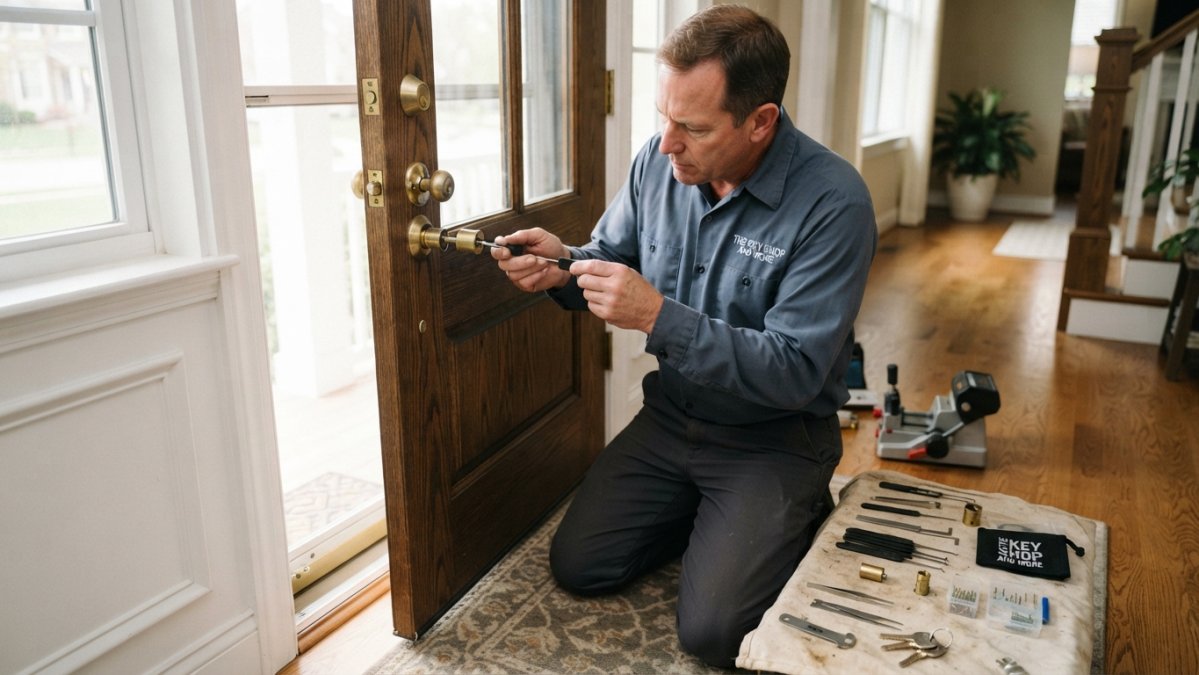
- Inspect the locks. The locksmith checks whether each cylinder is rekeyable and identifies the keyway and lock brand.
- Remove the cylinder. The technician removes the cylinder from the door.
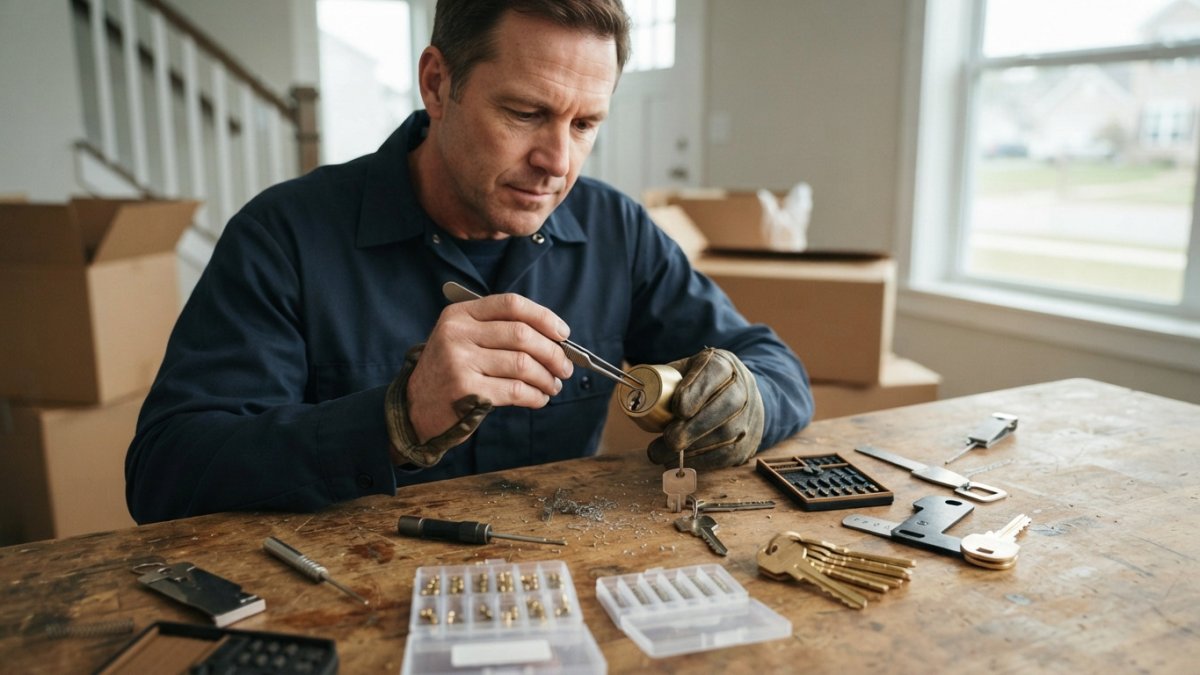
- Disassemble and replace pins. The pins inside the cylinder are removed and replaced with a new set matched to a fresh key.
- Reinstall and test. The cylinder goes back into the door, and the new key is tested for smooth operation.
- Hand over keys. You receive the new keys, and the old ones stop working.
A common mistake is assuming the process is complete once the door opens. Always test the new key yourself several times, including from the outside with the door closed, before the technician leaves.
The rekeying process follows a clear sequence, from inspection through to handing over the new keys.
| Step | What to do | Time or frequency |
|---|---|---|
| Inspect the locks | Check whether each cylinder is rekeyable and note the brand | Before any work starts |
| Remove the cylinder | Take the cylinder out of the door | Not stated |
| Replace pins | Swap internal pins for a new set matched to a fresh key | Not stated |
| Reinstall and test | Put the cylinder back and test the new key | Test several times |
| Hand over keys | Give you the new keys; old keys stop working | At the end of the visit |
How Long Does It Take to Rekey a Lock?
But the total time from your call to a working new key depends on several factors that are especially relevant in a new home.
What affects arrival time:
- Time of day and day of week. After-hours, weekend, and holiday calls typically have longer dispatch windows because fewer technicians are on the road. A scheduled weekday appointment is usually the fastest option.
- Your location relative to the locksmith. Give the dispatcher your full address and cross streets when you call;
- Information you provide upfront. Tell them the number of exterior doors, whether any locks are high-security or unusual brands, and whether you also need lockout service. This lets them send the right technician and parts on the first trip.
- Access to the property. If you are locked out, the technician must first gain entry before rekeying. That adds time, sometimes 20-40 minutes depending on the lock type and door condition.
What affects the rekeying time itself:
- Number of cylinders. A typical home with three to four exterior doors (front, back, side, garage entry) usually takes one to two hours total, including testing.
- Lock condition and compatibility. Seized, painted-over, or non-rekeyable cylinders may need to be removed, cleaned, or replaced, which adds time. Older homes sometimes have mismatched brands that require separate pin kits.
- Key duplication. If you want multiple copies made on-site, add a few minutes per key.
What Affects the Cost to Rekey House Locks
Pricing depends on several factors, and For current prices or a quote, contact The Key Shop And More through its website. The main variables are:
- Number of locks: More cylinders mean more labor and more new keys.
- Lock type and brand: Some cylinders are simpler to rekey than others. High-security locks often require specialist parts.
- Time of service: Emergency, after-hours or same-day calls usually cost more than scheduled appointments.
- Location: Travel time within the service area can affect the total.
- Hardware condition: A cylinder that is damaged or seized may need replacement instead of rekeying.
Ask for an itemized quote before work begins. A clear breakdown of labor, parts and any call-out fees makes it easy to compare options and avoid surprises.
Booking Emergency Rekeying With The Key Shop And More
If you have just moved into a new home, a rekey is one of the most useful things you can book in your first week. The Key Shop And More provides key duplication and locksmith assistance, so one call can cover several needs.
When you book, ask for a written quote. Once the work is done, test every new key, keep a record of who holds each one, and consider a periodic check of the locks as part of your home security routine.
Frequently Asked Questions
Can I change locks myself?
Some homeowners can swap a basic deadbolt or knob with a basic screwdriver, but rekeying a cylinder usually requires specialized pins, a plug follower, and a correct keyway. Mistakes can leave a door jammed or misaligned, and a locksmith can usually finish a rekey in one visit. If you attempt it yourself, confirm the lock is rekeyable first and keep the original pin kit for reference. For a new home where you need every cylinder reliable, a professional locksmith can finish the work in one visit.
How soon should I rekey the locks after moving into a new home?
Rekey as soon as possible after closing, ideally before you move your belongings in. Previous owners, tenants, contractors, cleaners, and anyone who received a spare key may still have access. Rekeying immediately means every exterior door and the garage use new keys only. Ask the seller or agent how many keys exist and who holds them, then rekey all exterior doors at once so no single old key remains usable. Keep a record of when the work was done for your own security planning.
What should I do if I'm locked out of my new home?
Stay calm and check every door and window first, including the garage and any side or rear entrances. If none are accessible, contact a local locksmith and ask about options for opening the door and rekeying it. Before the locksmith arrives, ask for identification or proof of residence, since reputable locksmiths verify this. Avoid unlicensed operators who quote a low price over the phone and then add large charges on site. Once inside, rekey the locks so the lockout cannot happen again through an old key.
Do I need to rekey every exterior door in a new home?
Yes, in most cases. Any exterior door that a former occupant could have a key to should be rekeyed, including the front, back, garage, basement, and side doors. Interior doors usually do not need rekeying unless they lead to a secure area such as a home office or safe room. If some doors use different lock brands or keyways, the locksmith can rekey them separately or change the cylinders. Bringing all exterior locks onto one key system also simplifies carrying and managing keys.