 how-to
Getting Spare Keys for Older Cars: A Step-by-Step Guide
Quick Summary
Getting spare keys for older cars starts with identifying your key type: mechanical, transponder or fob. Then look for an existing key code in your manual or on the original key tag, since a locksmith can cut a key from that code without touching the car. Expect a quote that depends on key type, and bring proof of ownership.
- Check whether your key is mechanical, transponder or a fob before calling anyone.
- Look for a key code in the owner's manual, original key tag or door jamb first.
- Transponder and fob keys must be programmed to the car, not just cut.
- Bring registration or title and the VIN; most providers require proof of ownership.
- Verify the blank's keyway profile or part number before buying a key online.
Table of Contents
- Why Older Cars Need a Different Approach to Spare Keys
- Identify Your Key Type: Mechanical, Transponder or Fob
- Getting Spare Keys for Older Cars Cost: What to Expect
- How to Get a Replacement Car Key Without the Original
- Where Can I Get a Spare Key Made for My Car?
- Getting Spare Keys for Older Cars Online: Risks and Limits
- Booking Your Spare Key with The Key Shop And More
- Frequently Asked Questions
Getting Spare Keys for Older Cars: A Step-by-Step Guide
Last Updated: November 9, 2026
Why Older Cars Need a Different Approach to Spare Keys
Getting spare keys for older cars is often harder than people expect. The process differs from newer vehicles in a few important ways. Older cars often use simple mechanical keys or early transponder designs, and the original key may be worn, lost or missing entirely.
The main difference is what the key does. A mechanical key only turns a lock cylinder. A transponder key also sends a code to the ignition, and that code must be programmed to the car. Many older vehicles predate the systems that make this simple, so the steps change with the model year.
A common mistake is assuming the newest option is always the right one. For an older car, a basic cut key may be all you need, and paying for programming you do not require wastes money. Start by confirming what your car actually uses.
Identify Your Key Type: Mechanical, Transponder or Fob
Before you call anyone, look closely at the key you have. The type determines your options and your cost.
- Mechanical key: A metal key with no plastic head and no buttons. It opens the doors and ignition only.
- Transponder key: A key with a plastic or rubber head containing a chip. The car will not start without the correct chip code.
- Key fob: A remote with buttons for locking, unlocking or opening the trunk. It may also contain a transponder chip.
Check the back of the key head and the owner's manual. Look for a part number or a visible chip. If you cannot tell, a locksmith can usually identify the key from a photo or a quick look at the lock.
Knowing the type matters because a mechanical key can often be cut from the lock or from a code, while transponder and fob keys need electronic programming.
Each key type calls for a different approach, so the table below sums up what to check and what it means for your options.
| Key type | What it looks like | What it means |
|---|---|---|
| Mechanical key | Metal key, no plastic head or buttons | Opens doors and ignition only |
| Transponder key | Plastic or rubber head with a chip | Car will not start without the correct chip code |
| Key fob | Remote with lock, unlock or trunk buttons | May also contain a transponder chip |
Getting Spare Keys for Older Cars Cost: What to Expect
Pricing depends on the key type, the vehicle, and whether programming is needed. Contact The Key Shop And More for a current quote for your specific car before you book.
Mechanical keys versus programmed keys
The work involves cutting a blank to match the lock. Programmed keys cost more because they need a blank, a chip, and a programming step that links the key to the car's computer.
A reader comparing options should ask what is included.
Factors that change the final price
- Key type: Mechanical keys cost less than transponder keys and fobs.
How to Get a Replacement Car Key Without the Original
Losing your only key on an older car is stressful, but it is usually solvable. The route depends on whether the car uses a mechanical lock, an early transponder system, or a fob, and on whether any key code survives. Work through these steps in order.
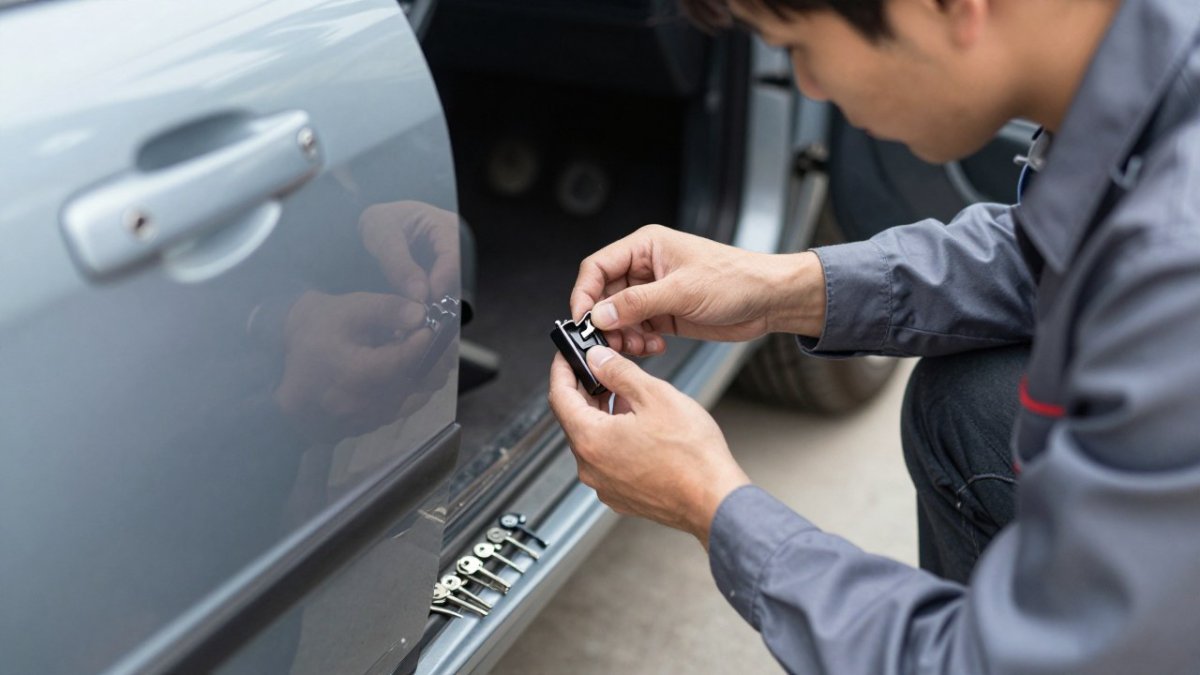
Step 1: Look for a key code before you call anyone
Many older vehicles have a key code recorded somewhere other than the key itself. Check these places first:
- Owner's manual and warranty booklet: Some manufacturers printed a key code card or sticker in the packet.
- Original key tag: The small metal or plastic tag that came with the key often has a code stamped on it. If you still have it, you may not need lock decoding at all.
- Door jamb, glovebox, or spare-tire well: A few older models have a sticker with the key code or a code that a dealer can cross-reference.
- Dealer or manufacturer records: With the VIN and proof of ownership, a dealership can sometimes retrieve the key code from its database. This works best for vehicles still within the manufacturer's record-keeping window.
If you find a code, a locksmith can cut a key to it without touching the car. That is faster and avoids any risk to the lock.
Step 2: Decode the lock cylinder
When no code exists, a locksmith can often decode the lock itself. For a mechanical key, the locksmith reads the tumblers in the door or ignition cylinder and cuts a matching key.
Step 3: Handle transponder and fob systems
If the car has a transponder chip or fob, a cut key is only half the job. The new key must be programmed to the vehicle.
Step 4: Prove ownership
Every legitimate provider will ask for proof of ownership before releasing a key code or cutting a key without an original. Bring your registration or title and the VIN. Without these, most providers will refuse the job, and that protects you from theft.
Step 5: Test before you pay
A new key cut from a code or a decoded lock should be tested in the door and the ignition before you leave. A worn or bent original can produce a poor copy, so ask the locksmith to confirm the new key turns smoothly in every lock it is meant to operate.
Where Can I Get a Spare Key Made for My Car?
You have several options. Each suits a different situation.
The right choice depends on your key type and what you already have. The Key Shop And More provides key duplication and locksmith services in the Rio Linda area.
Getting Spare Keys for Older Cars Online: Risks and Limits
Buying a key online can save money, but older cars carry risks that newer-car buyers rarely face. The biggest is the blank itself: many older vehicles use key profiles that are discontinued, aftermarket-only, or visually similar to a blank that will not fit. A key that looks right in a photo can fail in the lock.
Verify the blank before you order
Do not rely on the vehicle's make, model, and year alone. Before ordering:
- Compare the keyway profile: Photograph your existing key from the tip and both sides, and compare the groove pattern to the seller's photos. A reputable seller will show the profile clearly.
- Check the part number: Look for a manufacturer part number or an aftermarket cross-reference on the key head or in the owner's manual. Match that number, not just the vehicle description.
Obsolete and aftermarket blanks
For classic and older vehicles, original blanks may be out of production. Aftermarket blanks are often the only option, and quality varies. A common pattern is that a cheap aftermarket blank cuts and turns but wears faster than an original, so it may need replacement sooner. If the car is a keeper, ask a locksmith whether a higher-quality blank or an interchangeable keyway is available before you buy online.
You still need cutting and programming
Online sellers cannot cut or program a key for your car. You will still need a locksmith or dealership to cut the blank and, for transponder or fob keys, to program it.
Booking Your Spare Key with The Key Shop And More
When you are ready to get a spare key, have three things on hand: the key type or a photo of the key, your vehicle's make, model and year, and your proof of ownership. Having these ready makes the quote and the appointment faster.
The Key Shop And More covers mechanical keys, transponder keys and vehicle key fob replacement. You can review our full range of services before you book, so you know what is available for your vehicle.
For an older car, call with your details and ask for a quote that matches your key type.
Losing a key or having one wear out should not leave you stuck. The Key Shop And More can help you get a reliable spare for your older car, whether you need a simple cut key or a programmed fob. Get started with The Key Shop And More and have a working backup key in hand before the next time you need it.
Frequently Asked Questions
How much does it cost to get a key made for an older car?
Cost depends on the key type, the vehicle and whether you have an original key to copy. A basic mechanical key is usually the cheapest option, while transponder and fob keys need cutting plus programming, which raises the total. The Key Shop And More does not publish fixed prices for this service, so pricing depends on your vehicle and key type. Contact The Key Shop And More with your vehicle make, model and year for a quote before you book.
Can you get new keys for old cars?
In most cases, yes. Older cars with mechanical keys can usually be duplicated from the original key or from a key code tied to the lock. Cars with transponder chips need a blank cut and then programmed to the immobilizer, which depends on the vehicle's make and model year. Very old or discontinued vehicles may have limited key blank availability, so check compatibility before you assume a replacement is possible.
Can I get a replacement key with a VIN number?
Often, yes. A vehicle identification number can help a locksmith or dealer look up the correct key blank and programming procedure for your car. You will usually need to show proof of ownership, such as a registration or title, along with photo identification. The VIN alone does not reveal the key code for every vehicle, so the service provider may still need physical access to the car or the lock.
Where can I get a spare key made for my car?
Common options include a locksmith, a car dealership, a hardware store that cuts keys, or an online seller for key blanks. Locksmiths offer mobile service and can handle lost-key situations, while dealerships typically have access to factory codes and programming tools. Hardware stores are often suitable for simple mechanical keys only. The Key Shop And More can be contacted directly to confirm what it can cut and program for your specific vehicle.