 how-to
How to Rekey House Locks: A DIY Guide
Table of Contents
- Why and When to Rekey Your House Locks
- Rekeying vs. Replacing Locks: Which Option Is Right for You
- Tools and Supplies You'll Need
- How to Rekey a Kwikset Lock
- How to Rekey a Schlage Lock
- Rekeying a Lock Without the Original Key
- Common Mistakes to Avoid and Troubleshooting
- When to Call a Professional Locksmith
- Frequently Asked Questions
Last Updated: October 21, 2026
Why and When to Rekey Your House Locks
Learning how to rekey house locks is one of the smartest security moves a homeowner can make. When you move into a new home, you don't know who has copies of your keys. Former owners, real estate agents, contractors, and previous tenants might all have access. Rekeying gives you peace of mind by changing the internal pin configuration so only your new key works.
You should rekey your locks in these situations:
- You just moved into a new house or apartment
- You lost your keys or suspect someone has a copy
- A tenant moved out and you want to change access
- You hired contractors or service workers with key access
- A key broke and you need a fresh start
- You want all doors to work with a single master key
The process is straightforward. You change the pins inside the lock cylinder so your old keys no longer work. Only your new key will turn the lock. This is different from replacing the entire lock, which we'll cover next.
Rekeying vs. Replacing Locks: Which Option Is Right for You
Rekeying means changing the pins inside your existing lock so a new key works instead of the old one. Replacing means removing the entire lock and installing a brand new one.
Here's how they differ:
| Aspect | Rekeying | Replacing |
|---|---|---|
| Cost | Lower | Higher |
| Time | 15-30 minutes per lock | 30-60 minutes per lock |
| Lock condition | Works if lock is functional | Better for damaged locks |
| Security upgrade | Same security level | Can upgrade to better locks |
| Best for | Lost keys, new tenants | Broken locks, security upgrade |
Choose rekeying if your locks work fine and you just need new keys. Choose replacing if your locks are damaged, worn out, or you want to upgrade to a higher security lock type.
Most homeowners find that to rekey house locks is more practical because it costs less and takes less time. You keep your existing hardware. But if a lock is broken or you want modern smart lock features, replacement is the better choice.
Tools and Supplies You'll Need
Rekeying a lock requires specific tools. You can buy a rekeying kit that includes everything, or gather items individually. Here's what you need:
- Rekeying kit (includes most small tools)
- Screwdriver (usually included in kit)
- Working key or matching key for your lock
- Retaining clip or clip tool
- Follower (spring-loaded pin holder)
- Key pins and driver pins
- Small flashlight or headlamp
- Workbench or flat surface
- Small container to hold loose pins
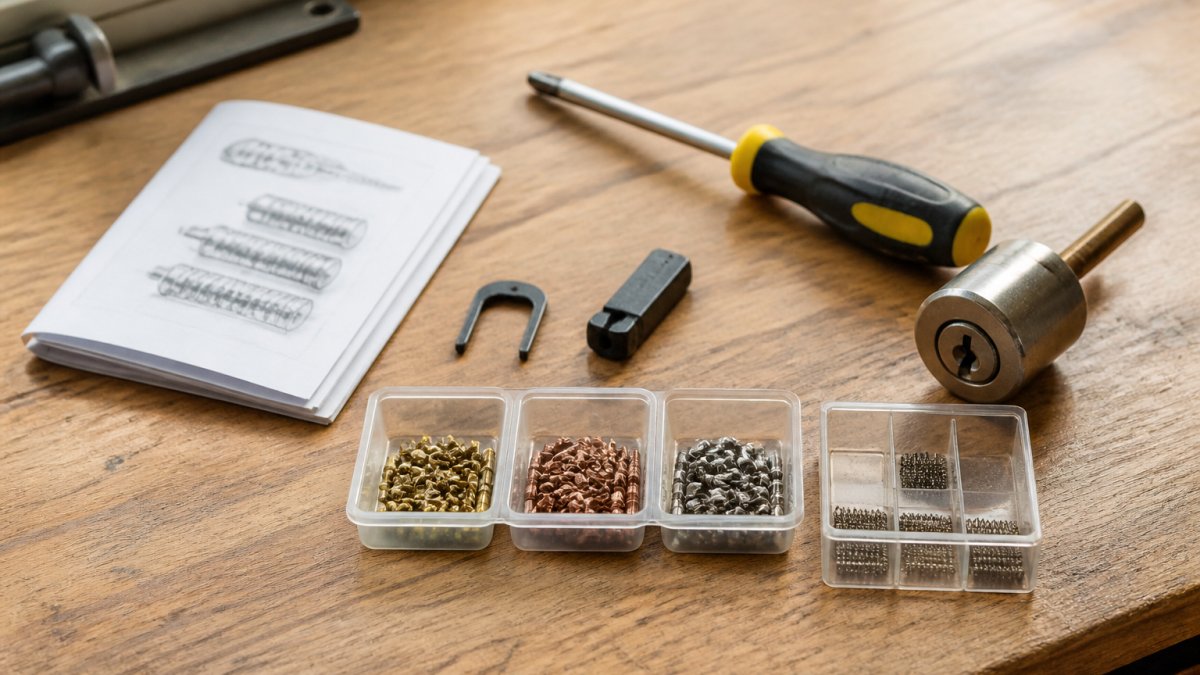
A rekeying kit costs less than calling a locksmith and gives you everything in one package. Most kits come with instructions specific to the lock type. Before you start, make sure you have a working key that matches your lock. This is essential for the rekeying process.
How to Rekey a Kwikset Lock
Kwikset locks are common in residential homes. They're straightforward to rekey if you follow the steps carefully.
Step 1: Remove the lock knob or deadbolt
Turn your screwdriver to remove the screws holding the lock to the door. On a knob, you'll find screws on the interior side.
Step 2: Remove the lock cylinder
Look for a small hole or slot on the cylinder. Insert the working key and turn it to a specific angle (usually 12 o'clock position).
Step 3: Empty the old pins
Once the cylinder is out, you'll see the plug (the part that turns with your key). Hold it over a small container. Gently push out the old pins from the bottom.
Step 4: Install new pins in the correct order
Your rekeying kit includes new pins. The kit instructions show which pins go in which order. This order matches your new key. Carefully insert each pin into the plug from bottom to top.
Step 5: Reassemble the cylinder
Insert the follower (the spring-loaded piece) into the plug opening. Slide the plug back into the cylinder housing. Make sure the retaining clip holds everything in place.
Step 6: Reinstall the lock in the door
Slide the cylinder back into the lock body. Reattach the lock to the door using the original screws. Test your new key in the actual door lock. It should turn smoothly without resistance.
How to Rekey a Schlage Lock
Schlage locks work similarly to Kwikset but have some differences in design. The process is nearly identical, but the internal layout varies slightly.
Step 1: Remove the lock from the door
Locate the screws on the interior side of your Schlage lock. Remove them with a screwdriver. Pull the entire lock assembly away from the door.
Step 2: Access the cylinder
Schlage locks have a small release button or pin. Insert your working key and turn it slightly. Press or push the release mechanism. The cylinder should separate from the lock body.
Step 3: Remove the old pins
Hold the plug over a small container. Push out the old pins from the bottom opening.
Step 4: Install new pins in order
Your rekeying kit should specify the pin arrangement for Schlage locks. Insert each pin carefully into the plug. The sequence is critical because it controls which key operates the lock.
Step 5: Reassemble and test
Reinsert the plug into the cylinder housing. Make sure the retaining clip is secure. Test your new key before putting the lock back on the door. The key should turn without binding or grinding.
Step 6: Reinstall in the door
Slide the cylinder back into the lock body. Screw the lock back onto the door. Test the new key in the installed lock to confirm it works properly.
Rekeying a Lock Without the Original Key
Sometimes you don't have the original key. This makes rekeying harder but not impossible. You have two main approaches.
Option 1: Use a blank key
If you have a blank key that fits your lock's keyway, you can use it as a working key. Insert the blank into the lock. Carefully manipulate it while turning to find the shear line (the point where the plug and housing meet). Once you find it, you can proceed with the normal rekeying steps. This requires patience and some trial and error.
Option 2: Call a locksmith
If you don't have a matching blank key, a locksmith can help. They have tools and expertise to work with locks even without the original key. They can pick the lock or use specialized equipment to determine the correct pin configuration. This is faster and more reliable than attempting it yourself without the right tools.
A common mistake is trying to force a non-matching key into the lock. This can damage the keyway and make rekeying impossible. If your key doesn't fit smoothly, stop and try a different approach.
Common Mistakes to Avoid and Troubleshooting
Most rekeying problems come from simple mistakes during assembly. Here's what to watch for.
Mistake 1: Installing pins in the wrong order
The pin sequence is critical. Each pin has a specific height that matches your new key. If you install them out of order, your new key won't work.
Mistake 2: Losing pins during disassembly
Pins are small and easy to lose. Use a shallow container to catch them as they fall out.
Mistake 3: Forcing the cylinder back in
If the cylinder doesn't slide smoothly back into the lock body, something is wrong. Don't force it.
Mistake 4: Not testing before reinstalling
Always test your new key in the removed lock before putting it back on the door. This catches problems early when you can still fix them easily.
Troubleshooting: Key doesn't turn after rekeying
If your new key won't turn in the lock, the pins are likely in the wrong order. Remove the lock and check each pin against your kit instructions.
Troubleshooting: Key turns but feels rough
Rough turning usually means a pin is binding. This happens when pins aren't fully seated or are slightly misaligned.
Troubleshooting: Cylinder won't slide back in
This typically means the plug isn't aligned with the housing. Make sure the retaining clip is in the correct position. Check that no pins are sticking out of the plug.
When to Call a Professional Locksmith
Some situations call for professional help. Knowing when to stop and call a locksmith saves money and frustration.
Call a locksmith if:
- You don't have a working or matching key
- Your lock is damaged or stuck
- You've tried rekeying and the lock still doesn't work
- You need to rekey multiple locks quickly
- You want to ensure security and proper installation
- Your lock is a specialty type or high-security model
Professional locksmiths have tools and training you don't have access to. They can handle locks that are difficult or impossible to rekey yourself. They also guarantee their work, so if something goes wrong, they'll fix it.
At The Key Shop And More, we provide professional rekeying services for homeowners who need reliable solutions. We can rekey your entire house to work with a single master key if needed. When you want peace of mind that the job is done right, professional service is worth the investment.
The cost of professional rekeying varies based on lock type and how many doors you need done. Contact a local locksmith for a quote specific to your situation.
Moving into a new home or losing your keys creates a real security concern. Rekeying solves that problem affordably and quickly. Whether you tackle it yourself or call a professional, the important thing is securing your home.
Frequently Asked Questions
Can I rekey my house locks myself, or do I need a locksmith?
You can rekey house locks yourself if you have the right tools and the original working key or a matching key. The process involves removing the lock cylinder, removing the old pins, and installing new key pins that match your new key. However, if you lack the original key, don't have a matching key, or feel uncomfortable disassembling your locks, hiring a professional locksmith is safer and faster. Many homeowners find the DIY approach manageable for one or two locks but prefer professional help when rekeying multiple doors.
How do I rekey a Kwikset lock without the original key?
Rekeying a Kwikset lock without the original key is challenging but possible. You'll need either a matching key from another Kwikset lock with the same keyway or a blank that fits your lock's keyway. Insert the matching key into the cylinder to align the shear line, then proceed with pin removal and replacement. If you cannot find a matching key, you must contact a locksmith or Kwikset directly, they can help you obtain the correct key or rekey the lock professionally. Attempting this without proper key alignment risks damaging the lock.
Is it cheaper to rekey a lock or replace it entirely?
Rekeying is typically more cost-effective than replacing a lock. Rekeying involves changing only the internal pins, preserving the existing lockset. Replacement requires removing the entire lock and installing a new one. If your current locks are in good working condition and you only need a new key, rekeying is the practical choice. Replace locks only if they're damaged, broken, or you want to upgrade to a different style or security level. For multiple doors, rekeying all to the same key is far less expensive than buying and installing new locksets.
What should I do if my lock doesn't work after I rekey it?
If your rekeyed lock doesn't work, first verify that all pins are correctly installed and seated at the shear line. Remove the cylinder again and check that the key pins and driver pins are in the right positions, the key pins should be on the bottom. Ensure the retaining clip is properly secured and the cylinder rotates freely inside the housing. If the new key still doesn't turn, the pins may be misaligned or the key may not match the pin configuration. Reassemble carefully and test with your new key before reinstalling. If problems persist, consult a locksmith to avoid lock damage.